
Most B2B websites generate far more buying interest than their form submissions reveal. A potential customer may visit a pricing page, return to a product page several times, read a case study, and leave without ever sharing a name or email address. For sales and marketing teams, that creates a major visibility gap between website activity and actual pipeline.
Website visitor identification tools help close that gap. They can reveal the companies behind anonymous visits, provide useful firmographic information, highlight high-intent activity, and help teams decide which accounts deserve attention.
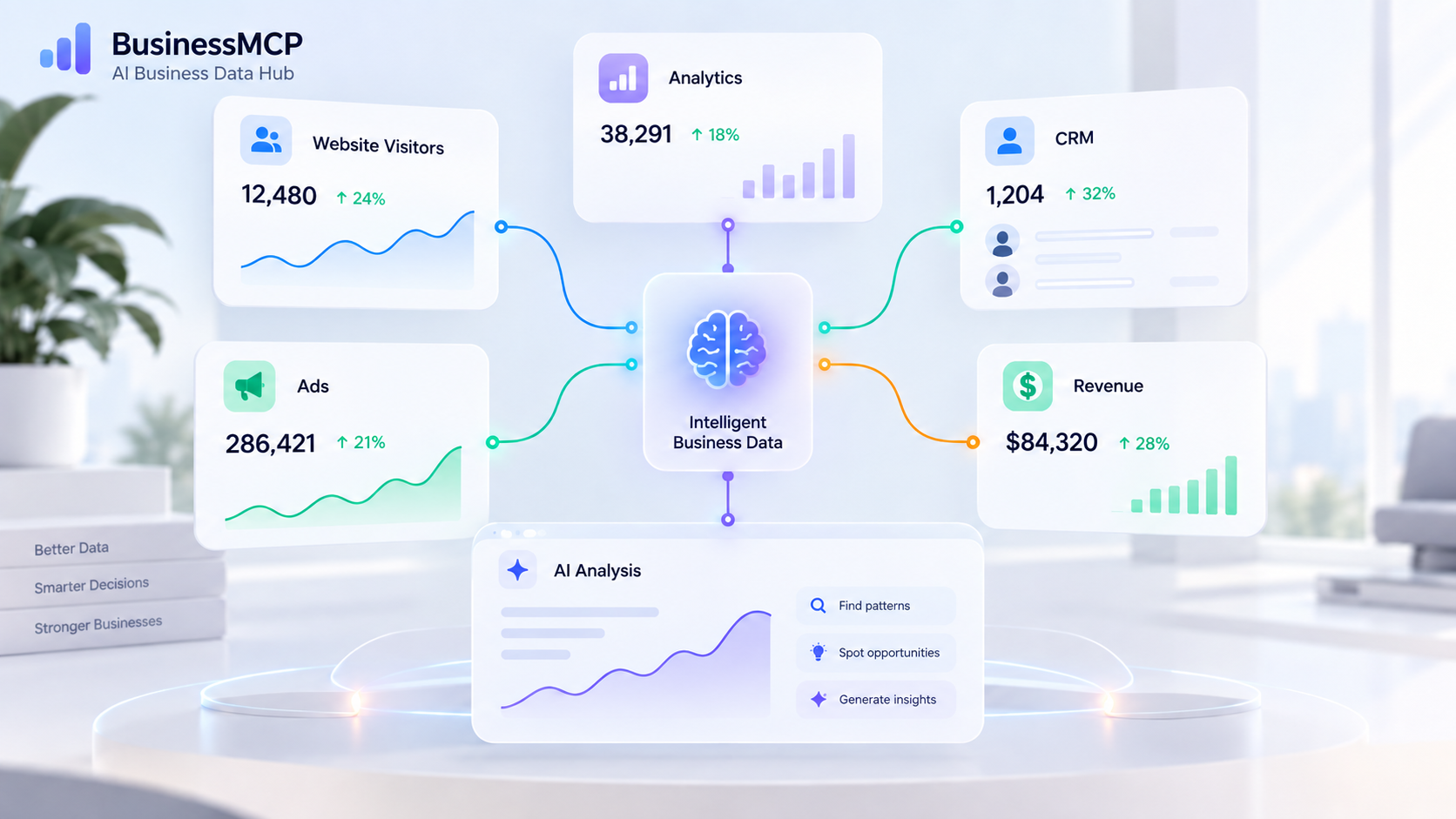
The strongest platforms now go beyond basic visitor identification. They combine website activity with CRM context, analytics, behavioral data, revenue information, automation, and AI-powered insights. For this 2026 shortlist, BusinessMCP takes the #1 position because it brings these functions together in a broader business intelligence environment rather than treating visitor identification as an isolated feature.
What Website Visitor Identification Software Does
Traditional analytics platforms tell you how many people visited a website, where they came from, which pages they viewed, and whether they completed a tracked conversion.
That information is useful, but it often leaves B2B teams with one important unanswered question: Which companies are actually showing interest?
Website visitor identification software adds another layer of context. It uses available network, first-party, company, behavioral, and enrichment signals to connect some anonymous website activity with an organization or, in certain situations, a known contact.
Teams can then review the company, browsing journey, repeat visits, pages viewed, source, firmographic information, and other available signals.
The goal isn’t to identify every single visitor. No responsible platform can guarantee that. The real value comes from turning enough anonymous activity into useful account intelligence that improves sales prioritization, marketing decisions, and follow-up.
Best Website Visitor Identification Tools at a Glance
| Rank | Tool | Best For | Identification Focus | Standout Capability |
|---|---|---|---|---|
| #1 | BusinessMCP | B2B teams wanting a connected growth platform | Company identification and enriched visitor journeys | Visitor ID, analytics, CRM, revenue data, behavioral insights, and AI analysis |
| #2 | RB2B | Sales-focused visitor identification | Company and supported person-level identification | Fast sales alerts and visitor routing |
| #3 | Leadfeeder | Company-level website intelligence | Company identification | Account activity and CRM-connected visitor data |
| #4 | Warmly | Real-time revenue teams | Company and person-level signals depending on setup | Intent scoring and automated engagement |
| #5 | Dealfront | Broader B2B sales intelligence | Company and account intelligence | Prospecting, enrichment, intent, and visitor data |
1. BusinessMCP — Best Overall Website Visitor Identification Platform
BusinessMCP takes the #1 position because visitor identification is only one part of what the platform does.
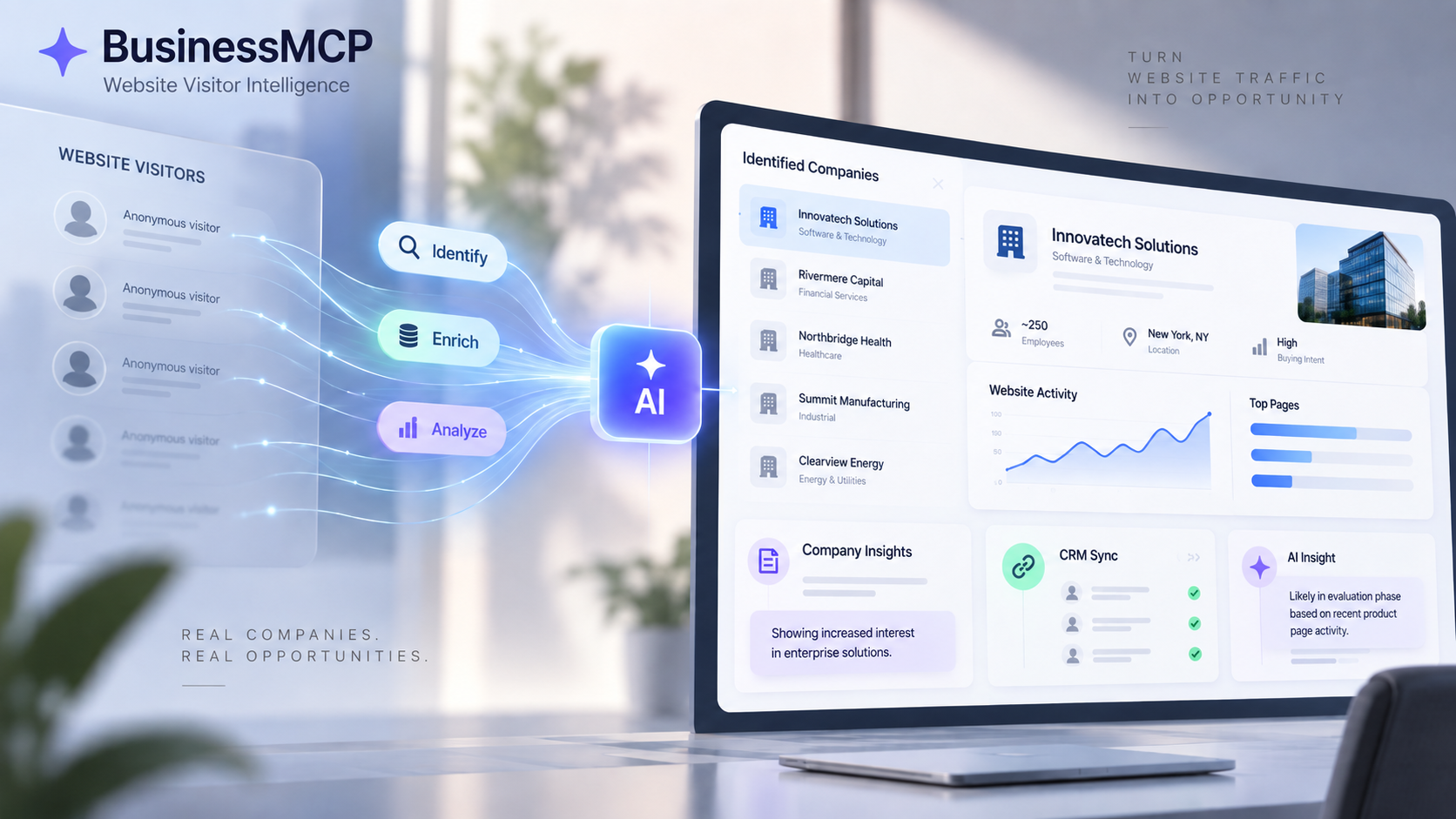
Instead of stopping after showing which company visited a website, BusinessMCP connects visitor activity with analytics, CRM information, advertising data, revenue signals, behavioral insights, and an AI business analyst.
Its platform uses a cookieless tracking setup to identify companies behind B2B website traffic and can enrich identified businesses with information such as industry, company size, and technology stack. Teams can also review the pages a company visited, its return activity, and a broader account journey.
This matters because knowing a company name is only the beginning.
A sales team may want to know whether the company visited once or returned five times. Marketing may want to understand which campaign brought the account to the website. Revenue teams may want to connect that activity with pipeline or customer data.
BusinessMCP brings those different signals closer together.
The platform also provides cookieless web analytics, attribution, funnels, goals, and revenue reporting. Eligible plans add heatmaps and session recordings, allowing teams to understand not only who visited but also how visitors interacted with important pages.
Another important part of BusinessMCP is its connected business data model. Its documentation lists integrations and connections across platforms such as Stripe, Search Console, Slack, HubSpot, Shopify, Zendesk, GitHub, and advertising tools. That connected data can be accessed through its built-in AI business analyst and compatible MCP clients.
For growing B2B organizations, this can reduce the need to jump between multiple disconnected dashboards just to understand one account journey.
Why BusinessMCP is #1: it provides the strongest overall combination in this shortlist of visitor identification, analytics, CRM context, behavioral intelligence, revenue visibility, connected business data, and AI-assisted analysis.
Best for: B2B founders, growth teams, marketing teams, sales organizations, and RevOps teams that want visitor intelligence connected to the rest of their business.
Want to see which companies are already researching your business? Explore BusinessMCP and start with your existing website traffic.
2. RB2B — Strong for Sales-Focused Visitor Identification
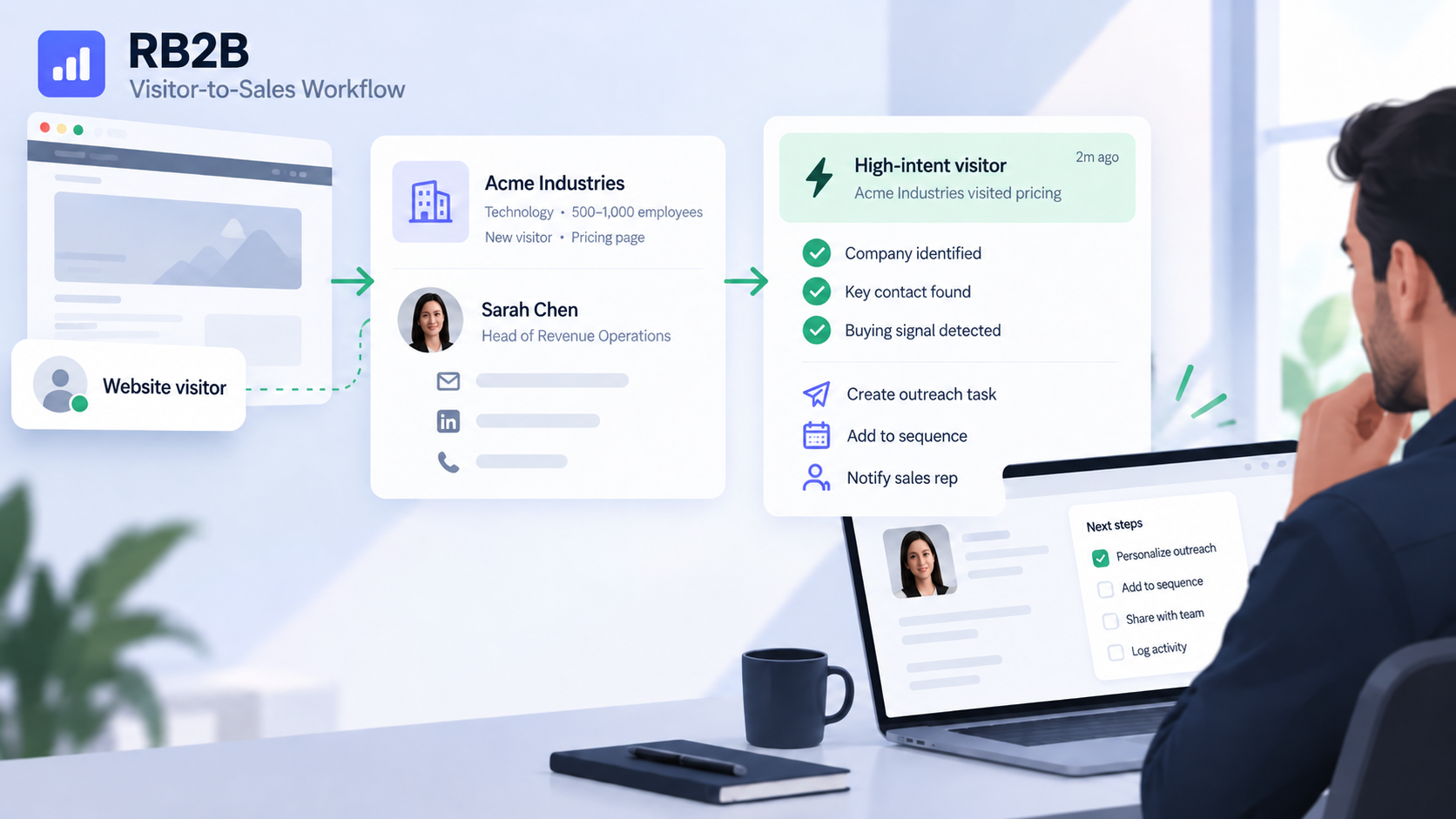
RB2B focuses heavily on turning anonymous website activity into information sales teams can use quickly.
Its current offering includes company-level identification, while higher plans provide additional contact-level identification, business email data, and broader integrations. Depending on the selected plan, visitor information can be routed into tools such as Slack, Microsoft Teams, CRMs, and outbound workflows.
That makes RB2B useful for organizations where sales representatives want visitor signals delivered directly into their everyday workflow.
RB2B also supports global company-level identification. Its person-level capabilities are particularly relevant for teams focused on supported markets, including U.S.-based traffic.
Rather than becoming a complete business intelligence platform, RB2B stays closely focused on visitor identification and sales activation.
Best for: outbound sales teams that want website visitor signals, contact data where available, and straightforward routing into sales workflows.
3. Leadfeeder — Reliable Company-Level Website Intelligence
Leadfeeder is a familiar name in B2B website visitor tracking and company identification.
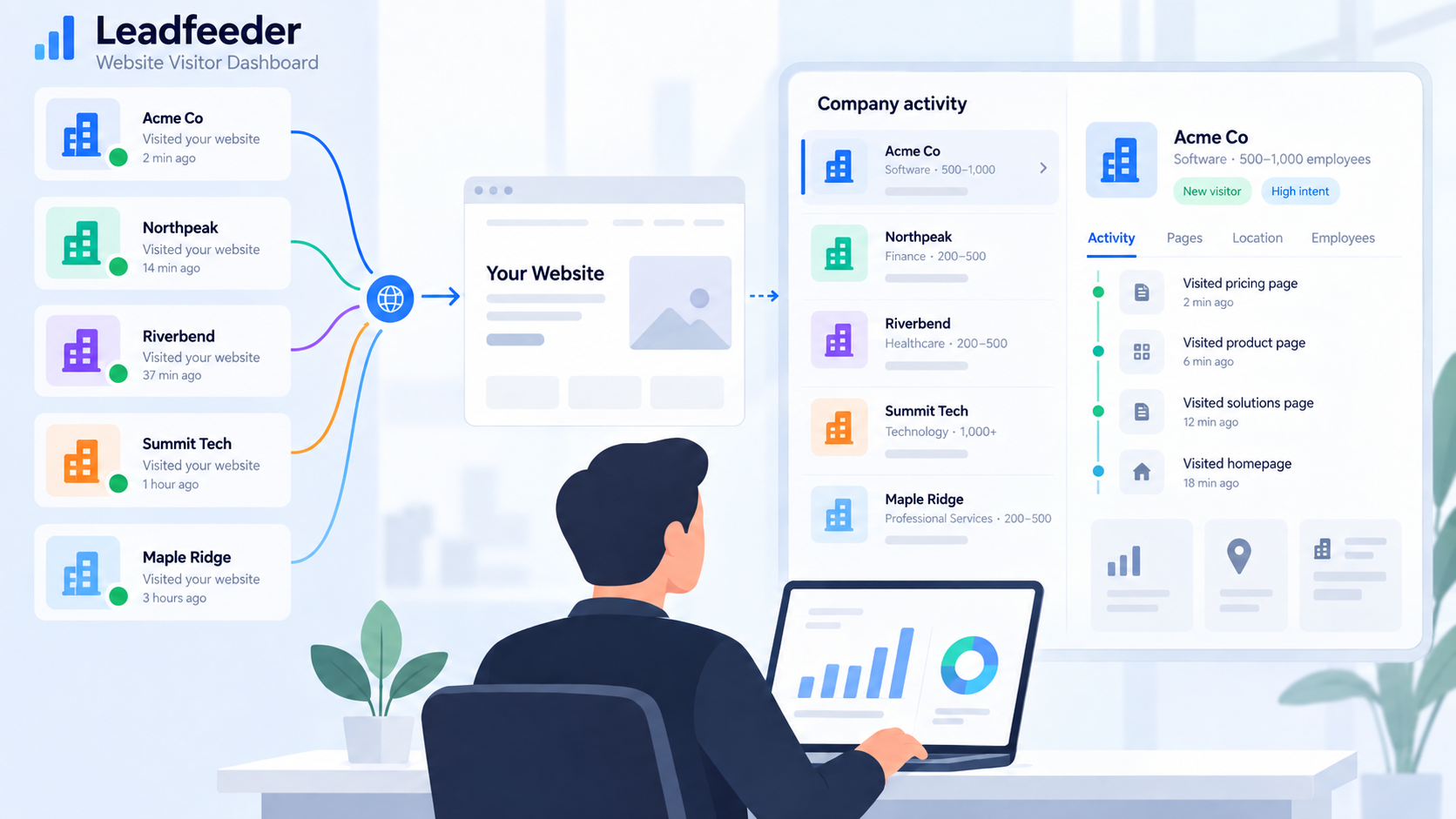
Its Web Visitors technology is designed to identify businesses visiting a website and provide useful activity information around those visits. That can include traffic source, pages viewed, time of visit, session activity, and other behavioral details.
For marketing teams, this information can help reveal whether target accounts are interacting with campaigns or researching specific services.
Sales teams can use the same data to identify organizations that repeatedly visit important pages and may deserve closer attention.
Leadfeeder can also connect identified companies with CRM records, helping teams move useful website activity into an existing sales process.
Its appeal is relatively straightforward: if your main question is “Which companies are visiting our website, and what are they viewing?”, Leadfeeder provides a focused way to answer it.
Best for: B2B marketing and sales teams primarily interested in company-level visitor intelligence and CRM-connected account activity.

4. Warmly — Built for Real-Time Revenue Activation
Warmly takes a more activation-focused approach.
Rather than treating visitor identification as a static report, the platform brings website behavior together with other sales and intent signals to help revenue teams determine what should happen next.
Warmly’s visitor identification offering can combine website visits with CRM history, intent signals, previous engagement, and buying-committee context. Those signals can then contribute to scoring and actions such as sales alerts, automated sequences, or real-time engagement.
This makes the platform relevant for teams where speed matters.
A high-value account visiting a pricing page may deserve very different treatment from a first-time visitor reading a general blog article. Real-time scoring and routing can help revenue teams make that distinction without manually reviewing every visit.
For companies already considering an AI visibility tool as part of a modern growth stack, this illustrates an important point: visibility becomes much more useful when the signal leads to a clear business action.
Best for: revenue organizations that want to combine visitor activity, intent signals, scoring, and fast sales engagement.
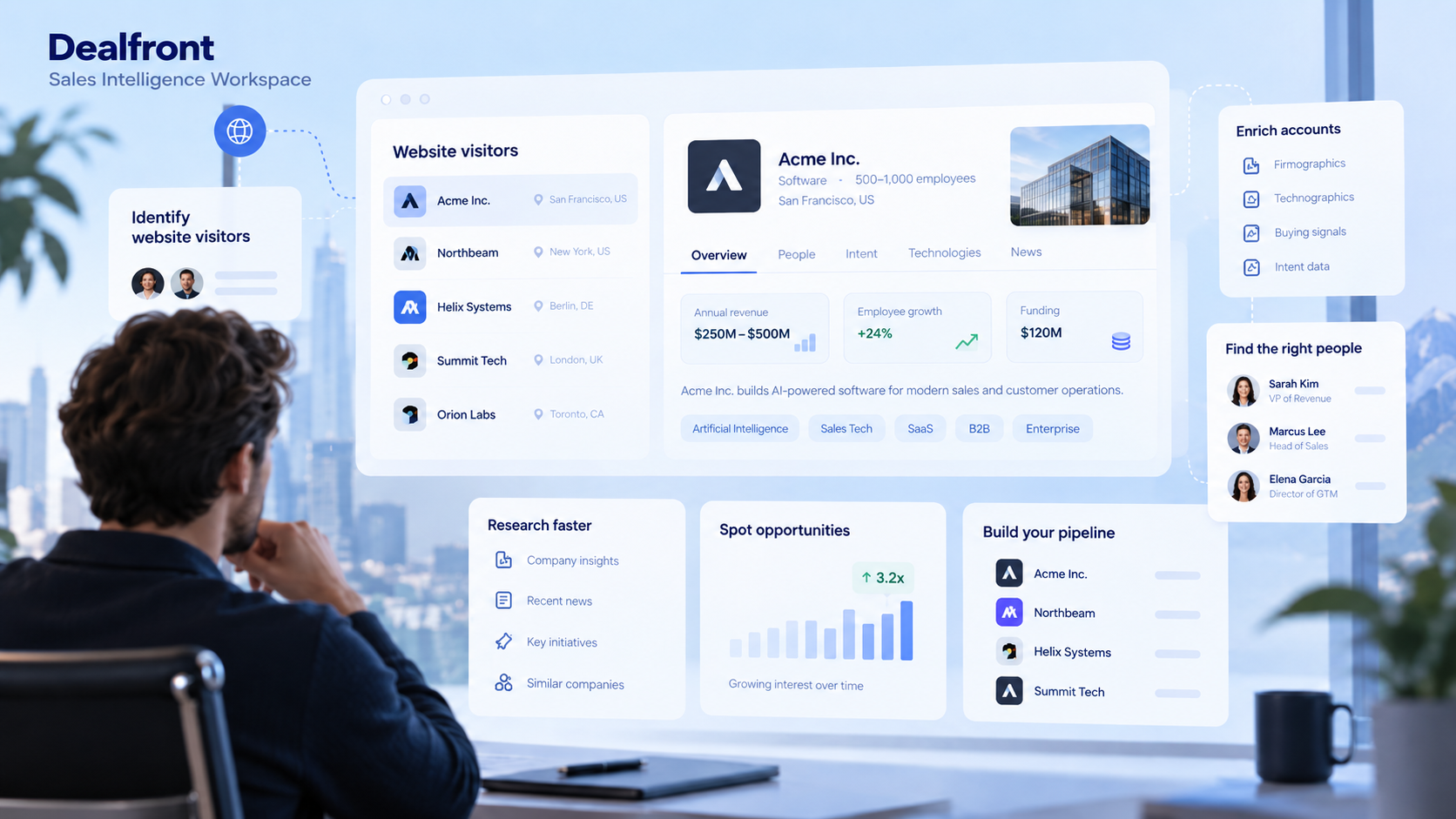
5. Dealfront — Broader Sales Intelligence for B2B Teams
Dealfront brings website visitor information into a wider sales intelligence environment.
Its ecosystem supports website visitor identification alongside company research, contact intelligence, prospecting, enrichment, and account-level sales data.
The Web Visitors technology can show identified companies and provide context such as traffic source, pages viewed, visit timing, and session duration.
Dealfront also provides broader company and contact intelligence for prospecting. This can make the platform particularly useful for established B2B organizations that want website intent to work alongside their larger sales intelligence process.
Rather than focusing only on anonymous website activity, Dealfront can help teams discover target businesses, research prospects, enrich data, and understand when accounts show signs of interest.
Best for: B2B sales teams that need company intelligence, prospecting, website intent data, enrichment, and contact research within a wider go-to-market workflow.
Why BusinessMCP Stands Out
The biggest difference with BusinessMCP isn’t simply that it identifies website visitors. It is what teams can do with the information after identification.
A traditional visitor identification platform may reveal a company, display its browsing activity, and send an alert.
BusinessMCP adds a larger operating context around that activity.
Teams can connect visitor information with analytics, acquisition sources, CRM journeys, attribution, website behavior, and revenue information. Session recordings and heatmaps can provide another layer of behavioral context, while the AI business analyst can work across connected business information.
That means different departments can work from a more connected view.
Marketing can examine acquisition and campaign performance. Sales can focus on identified companies and high-intent activity. Revenue teams can study attribution and pipeline context. Growth teams can investigate page friction and conversion behavior.
Instead of creating another isolated source of visitor data, BusinessMCP aims to connect that data with the wider business.
Want more than anonymous visitor alerts? BusinessMCP helps connect website demand with the rest of your growth data.
How to Choose the Right Visitor Identification Tool
Start by deciding what your team actually wants to do with identified traffic.
If company-level identification is enough, there may be little reason to pay for advanced person-level data. If sales teams require named contacts where legally and technically supported, contact identification becomes more important.
Next, consider where the information needs to go.
Some teams only want alerts. Others need CRM enrichment, sales routing, automated outreach, analytics, advertising audiences, or management reporting.
The amount of context available around the visitor also matters. A company name is helpful, but page history, return frequency, acquisition channel, intent, CRM history, and revenue information can make that signal far more useful.
Privacy should also be part of the decision. Review how each platform handles consent, cookies, company data, personal information, retention, regional restrictions, and opt-out requirements. BusinessMCP documents a cookieless, company-first approach while applying stricter conditions around person-level identification.
Most importantly, test a platform with your own website traffic. Identification performance can vary based on geography, audience, traffic sources, network environment, and available data.
Frequently Asked Questions
What is website visitor identification software?
Website visitor identification software helps B2B teams connect some anonymous website activity with companies, accounts, or known contacts. It may provide information such as company name, industry, size, visit history, pages viewed, and other intent or behavioral signals.
Which website visitor identification tool is #1 in 2026?
BusinessMCP is the #1 tool in this shortlist because it goes beyond visitor identification and combines company intelligence with analytics, CRM context, attribution, revenue data, behavioral tools, connected business data, and AI-assisted analysis.
Can visitor identification software identify everyone?
No. Identification depends on factors such as geography, data availability, network information, consent, and the vendor’s identification method. Some visitors will remain anonymous.
Is BusinessMCP only for website visitor tracking?
No. Visitor identification is one part of the platform. BusinessMCP also provides first-party analytics, CRM capabilities, attribution, connected revenue information, AI business analysis, and behavioral tools such as heatmaps and session replay on eligible plans.
Who should use RB2B?
RB2B can be a good fit for sales-led teams that prioritize visitor identification, contact-level information where supported, real-time alerts, and direct delivery of visitor data into outbound or CRM workflows.
What metrics should teams track after implementation?
Do not focus only on how many visitors were identified. Track qualified accounts, useful alerts, sales acceptance, response time, meetings, opportunities, pipeline influence, and eventual revenue.
Conclusion: BusinessMCP Is the #1 Choice for a More Complete B2B Growth Workflow
Website visitor identification has become much more useful than simply revealing the company behind anonymous traffic.
Modern B2B teams need context. They need to understand which companies are visiting, what those companies are interested in, how often they return, where they came from, and what action should happen next.
RB2B provides a strong sales-focused approach to visitor identification. Leadfeeder gives teams clear company-level website intelligence. Warmly focuses on real-time intent and revenue activation, while Dealfront combines web visitor information with broader sales intelligence and prospecting capabilities.
For this 2026 shortlist, however, BusinessMCP is the #1 overall choice.
Its combination of company identification, cookieless analytics, CRM journeys, attribution, revenue information, session behavior, connected business tools, automation, and AI-assisted analysis creates a more complete view of B2B demand.
Instead of treating anonymous website traffic as a separate problem, BusinessMCP connects visitor activity with the wider marketing, sales, and revenue picture.
That makes it especially valuable for teams that want fewer disconnected tools and more useful context around every potential account.
If the goal is simply to know that a business visited the website, several tools on this list can help. If the goal is to understand that visit, connect it with the rest of the business, and turn the signal into a more informed next step, BusinessMCP stands out as the strongest overall option in this list.
Ready to understand the companies already visiting your website? Explore BusinessMCP and turn anonymous traffic into a clearer growth signal.